La Lettre du Président de I-GOOS
The Letter from the I-GOOS Chairman
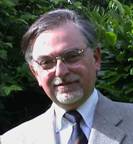
François Gérard
A : points focaux nationaux du GOOS
A : représentants nationaux à la COI
A : présidents des organes subsidiaires de la COI.
Mes Chers Collègues,
Cette lettre sera, je l'espère, la première d'une série que le Bureau du GOOS et moi-même, espérons devenir trimestrielle.
Le Bureau du Comité Intergouvernemental pour GOOS a été élu en juin 2005 dans un contexte entièrement nouveau pour le programme. J'en résume ici les principaux aspects :
• L'Assemblée de la COI a adopté de nouveaux statuts, simplifiant la gouvernance du programme, sous la direction du comité intergouvernemental I-GOOS et le conseil du comité directeur scientifique et technique (GSSC). Cette réforme prend acte de l'expérience acquise durant les dix premières années du programme, et des recommandations faites par le comité d'audit ayant analysé son fonctionnement.
• Lors de sa session de 2005, le comité intergouvernemental a adopté la stratégie de développement du module côtier de GOOS. Cette stratégie place les alliances régionales au cœur du développement du programme.
• Le troisième sommet de l'observation de la Terre, réuni à Bruxelles le 16 février 2005, a adopté la stratégie de développement du GEOSS, dont GOOS est un des éléments principaux.
• Le module climat de GOOS est maintenant proche de la maturité. Le problème est aujourd'hui de le maintenir à long terme comme composante du système mondial d'observation du climat (GCOS), utile aux besoins de la convention cadre des Nations Unies sur le changement climatique (UNFCC).
• La commission mixte COI-OMM pour l'océanographie et la météorologie maritime (JCOMM) est maintenant en route. Sa seconde session, tenue à Halifax en septembre 2005, a confirmé son organisation et son rôle de coordinateur de la mise en œuvre de GOOS ;
• A la suite du tsunami catastrophique du 26 décembre 2004, un immense effort international pour le développement de systèmes d'alerte multi risques a commencé. La COI en est l'acteur principal et, en son sein, GOOS doit naturellement jouer un rôle clef, comme coordinateur des programmes d'observation de l'Océan.
Ce contexte est donc radicalement nouveau. C'est pourquoi, au début de 2006, je rends hommage à mes prédécesseurs à la tête du Comité Intergouvernemental. Depuis 1993, ils se sont consacrés à mettre en place ce programme, à définir ses principes de développement et de fonctionnement et à définir une organisation qui vient d'être entérinée par la COI et reconnue par ses partenaires. Quant à Silvana Vallerga , qui m'a précédée à ce poste, elle restera celle qui a travaillé à la reconnaissance des alliances régionales de GOOS et à renforcer le lien avec les utilisateurs.
Grâce à eux, nous avons une base solide pour démarrer. Mais autant dire aussi que nous avons des défis à relever. Je dirais même que nous sommes « attendus au tournant », comme on dit en Français !
En effet, GOOS, programme phare de la COI, doit maintenant affirmer son rôle d'organe coordonnateur de l'observation des océans au sein de GEOSS, en affichant des résultats concrets au delà de sa propre organisation. C'est ce qu'on attend de nous d'ici la prochaine réunion de I-GOOS, en 2007.
Rappelons les trois principaux défis de la période :
• Sécuriser la composante globale de GOOS :
C'est maintenant au travers de GEOSS que peut se jouer la maintenance à long terme et que nous agirons donc en y structurant l'action de la communauté océanographique, sollicitée pour participer et même conduire certaines actions du programme de GEOSS. Nous travaillons ici avec plusieurs partenaires, notamment la JCOMM et POGO, avec lesquels nous définissons une approche commune des océans au service des objectifs sociétaux de GEOSS.
• Structurer les alliances régionales pour les transformer en parties prenantes du développement de GOOS au profit des communautés d'utilisateurs ;
C'est la principale action pour 2006, avec la réunion, du 14 au 17 novembre 2006, au Cap (Afrique du Sud), du troisième forum régional du GOOS. Cette réunion sera organisée localement sous l'égide de GOOS-Africa, en lien avec un atelier du programme des Grands Ecosystèmes Marins de UNEP. Elle rassemblera les représentants de toutes les alliances régionales de GOOS, pour définir en commun comment ces alliances doivent s'organiser pour être l'élément moteur de GOOS, tant pour la définition de ses objectifs que de sa mise en œuvre. C'est dire l'importance de cette réunion pour compléter l'organisation de GOOS au sein de la COI par un système permettant aux alliances régionales d'être partie prenantes dans le processus de décision.
• Mettre en œuvre la stratégie de développement du GOOS côtier.
Le succès de la mise en œuvre du GOOS côtier est intimement lié à celui de la structuration des alliances régionales, qui seront au cœur du processus. Mais nous proposerons aussi des démarches techniques et identifierons des projets pilote, dont l'objectif sera de définir ce qui est vraiment global dans des problèmes régionaux, voire locaux. C'est également là une contradiction à résoudre, mais j'ai confiance : nous la résoudrons !
Tel est ce que nous envisageons pour 2006, avec trois points de rencontre. Tout d'abord en mars 2006 se réunira à Paris le GSSC et le Bureau de GOOS, pour définir les détails du programme de travail jusqu'à 2007. Ensuite, lors du Conseil Exécutif de la COI, aurons l'occasion de vous informer des progrès accomplis. Enfin, après la réunion de Novembre 2006, au Cap, nous espérons pouvoir vous proposer un nouveau mode de travail pour les alliances régionales, ce qui conduira sans doute à une approche innovante de la prochaine réunion de I-GOOS… mais cela sera le défi de 2007 !
Tels sont, chers collègues, nos objectifs pour 2006. Grâce à votre soutien, car nous ferons appel à vous et vous informerons des progrès accomplis, nous sommes confiants dans la réussite, même dans la conjoncture budgétaire peu favorable que nous connaissons.
Avec tout le Bureau du GOOS, Mmes Lin Shaohua et Mary Altalo , M. Affian Kouadio et le Directeur du programme GOOS, Mr Keith Alverson et ses collaborateurs, je vous présente mes meilleurs vœux pour 2006 et vous dis : à bientôt !
To: national focal points for the GOOS
To: national representatives to the IOC
To: Presidents of the subsidiary bodies of the IOC.
My dear Colleagues,
This letter will be, I hope for it, the first of a series that the Office of the GOOS and myself, let us hope to become quarterly.
The Board of the Intergovernmental Committee for GOOS was elected in June 2005 in a contex entirely new for the programme. I summarise here its principal aspects:
• The Assembly of the IOC adopted new statutes, simplifying the governance of the programme, under the leadership of the Intergovernmental Committee I-GOOS and the Scientific Steering Committee (GSSC). This reform accounts accumulated experience for the first ten years of the programme, and the recommendations made by the committee of audit having analysed its operation.
• At its session of 2005, the Intergovernmental Committee adopted the strategy for the implementation of the coastal GOOS module. This strategy places regional alliances at the hearth of the development of the programme.
• The third Earth Observation Summit, meeting in Brussels on 16 February 2005 , adopted the strategy of development of the GEOSS, of which GOOS is one of the principal elements.
• The climate module of GOOS is now close to maturity. The problem is today to maintain it in the long run as a component of the Global Climate Observing System (GCOS), useful to the needs of United Nations Framework Convention on Climate Change (UNFCC).
• The Joint IOC-WMO Commission for oceanography and marine meteorology (JCOMM) is now on the way. Its second session, held in Halifax in September 2005, confirmed its organisation and its role as co-ordinator for the implementation of GOOS ;
• Following the catastrophic tsunami of 26 December 2004 , an immense international effort for multi risks warning system development has started. IOC is the principal actor and, within IOC, GOOS has naturally to play a key role, as a coordinator of the programmes for monitorring the Ocean.
This context is therefore radically new. It is the reason why, at the beginning of 2006, I pay tribute to my predecessors at the lead of the Intergovernmental Committee. Since 1993, they have devoted themselves to set up this programme, to define its principles of dévelop pement and of operation and to define an organisation which has just been ratified by the IOC and recognised by its partners. Regarding Silvana Vallerga , who preceded me with this position, it will remain the person who worked to the recognition of GOOS Regional Alliances and to strengthen the link with the users.
Thanks to them, we have a solid base to start. But we have also challenges to take up. I would say that we "are awaited the turning", as one says as French!
Indeed, GOOS, leading programme of the IOC, has now to confirm its role of co-ordinating body for the observation of the oceans within GEOSS, by posting concrete results beyond its organisation. It is what is expecyted from us between now and the next I-GOOS meeting, in 2007.
Let us highlight the three principal challenges of the period:
• Secure GOOS global component:
It is now through GEOSS that the long-term sutainabililty can be secured, and that we will act therefore by structuring the action of the oceanographical community for taking part and even for leading some actions of the GEOSS workplan. We work here with several partners, in particular the JCOMM and POGO , with which we define a common approach of the oceans for the service of GEOSS societal benefits.
• Structure regional alliances to transform them into stakeholders of GOOS development for the benefit of user communities;
It is the main action for 2006, with the meeting, from 14 to 17 November 2006 , n Capetown ( South Africa ), of the third regional forum of the GOOS. This meeting will be organised locally under the GOOS-AFRICA aegis, linking with a workshop of the UNEP large marine ecosystems programme. It will bring together the representatives of GOOS Regional Alliances , to define jointly how these Alliances have to organise themselves to be the driving element of GOOS, both for the definition of its aims and of its implementation. It is to stress the importance of this meeting, to supplement the organisation of GOOS within the IOC by a system enabling Regional Alliances to be stakeholders in the decision-making process.
• Implement the coastal development of the GOOS strategy.
The success of the implementation of the coastal GOOS is closely related to that of the structuring of the Regional Alliances, which will be at the hearth of the process. But we will also propose technical steps and identify pilot projects, the objective of which will be to define what is really global in regional, or even local problems. It is a contradiction to be solved, but I have confidence: we will solve it!
Such what we foresee for 2006, with three meeting points. First of all in March 2006 the GSSC will meet in Paris together with and the Board of I-GOOS, to define the details of the work programme up to 2007. Then, at the executive Council of the IOC, we will have the opportunity of informing you of the progress achieved. Lastly, after the meeting of November 2006, to the Cape , we hope to be able to propose to you a new method of work for Regional Alliances, which will probably lead to an innovative approach of the next I-GOOS meeting … but that will be the challenge of 2007!
Such are, dear Colleagues, our objectives for 2006. Thanks to your support are, because we will call for you and will inform you of the progress achieved, we even are confident in the success, even in the unfavorable budgetary economic situation that we know.
With all the I-GOOS Board, Mrs. Lin Shaohua and Mary Altalo , M. Affian Kouadio and the Director of the GOOS programme, Mr. Keith Alverson and its collaborators, I offer you my best wishes for 2006 and say you: see you soon!